When we consider building our own home, the conversation usually revolves around the “cost per square meter.” It’s the standard metric in traditional construction. However, at Behome, we believe that figure is incomplete. Focusing solely on construction costs without considering the “cost of living” associated with the home is a common financial mistake.
A home shouldn't be a bottomless pit of maintenance costs and energy bills. On the contrary, it should be a sound investment: an asset that retains and increases its value from one generation to the next.
Today we’re taking a look at the actual cost-effectiveness of building to PassivHaus Premium and green building standards. Does it make financial sense? The short answer is yes. We’ll explain the long answer below.
1. The Math of Saving: Drastically Lowering Your Bills
The first return on investment is immediate and monthly: your energy bill.
In a conventional home, a large portion of your money literally goes out the windows, through thermal bridges, and through poorly insulated walls. You’re paying to heat or cool the street.
Behome's value proposition is based on a drastic reduction in energy consumption. Thanks to bioclimatic architecture and the PassivHaus Premium standard, we achieve:
- A stable temperature all year round without relying on constant central heating.
- No cold or hot spots thanks to a design free of thermal bridges.
- Dual-flow ventilation with heat recovery, which conditions the incoming air using energy from the outgoing air.
This transforms monthly energy bills from a "shock" into a minimal, almost negligible cost. Multiply that monthly savings by 30 or 40 years of the home's lifespan: the result pays for a large portion of the home.
2. Asset Appreciation: An Asset Prepared for the Future
The real estate market is changing. European regulations are becoming increasingly strict regarding energy efficiency and carbon footprints.
A house built today to the minimum legal standards (Technical Building Code) will be an “old” and energy-inefficient house in 10 years. Its market value will decline because it will require costly renovations to meet new requirements.
In contrast, a Behome home is designed to ensurelong-term appreciation of its value. By meeting today’s standards of technical excellence and sustainability—which will become mandatory in the future—you are protecting your investment.
- Certifications: We work with recognized assessment systems that certify a home’s condition and energy efficiency. This “seal of quality” demonstrates the property’s value in the event of a future sale.
- Growing demand: More and more buyers are seeking “conscious luxury”—spaces that prioritize their health and the planet. Your home will be a rare and sought-after asset.
3. Durability and Maintenance: The Myth of Fragility
There is a common misconception that natural materials like wood are less durable than concrete. Nothing could be further from the truth if they are used with the right technology.
Our mission is to build for the long term; we design homes that are built to last.
- We use natural materials (wood and straw panels) that, because they are protected by a waterproof, weatherproof multi-layer roof, are not subject to weathering.
- By preventing condensation and moisture buildup (thanks to the breathability of the materials), the structure remains sound for decades, reducing the maintenance costs that typically arise in conventional construction projects due to cracks or moisture damage.
4. Green Finance: Banks Prefer It Too
The banking sector now recognizes the value of sustainability. "Green Mortgages" offer better interest rates and terms for homes with high energy efficiency ratings (Class A or PassivHaus).
By submitting a comprehensive 360° project proposal with a fixed budget and green certifications, the bank’s risk profile is reduced, making it easier to secure more affordable financing. In other words: it costs you less to borrow money to build an eco-friendly home.
Conclusion: Expense vs. Investment
Traditional construction focuses on keeping initial costs low, while overlooking the high future costs (bills, renovations, healthcare). The Behome Way takes the opposite approach: a thoughtful initial investment for a life of financial freedom and well-being.
You’re not just buying a roof over your head; you’re investing in preventive health and a safe haven withgrowing value.
Would you like to see how this investment plays out?
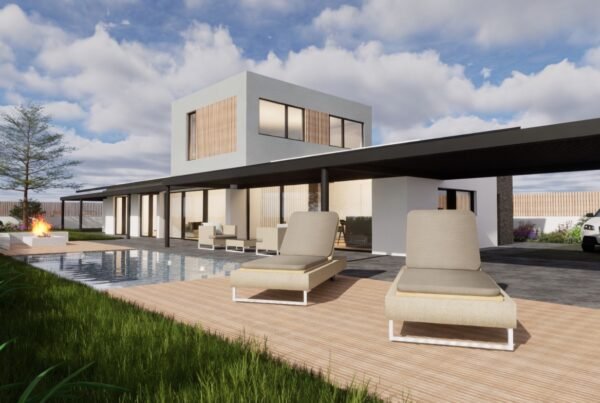
We are currently putting the finishing touches on the Francaset House in Roda de Berà, Barcelona. This is the perfect opportunity to visit the construction site, experience the atmosphere and tranquility, and understand why a Behome house is the safest investment for your family.